
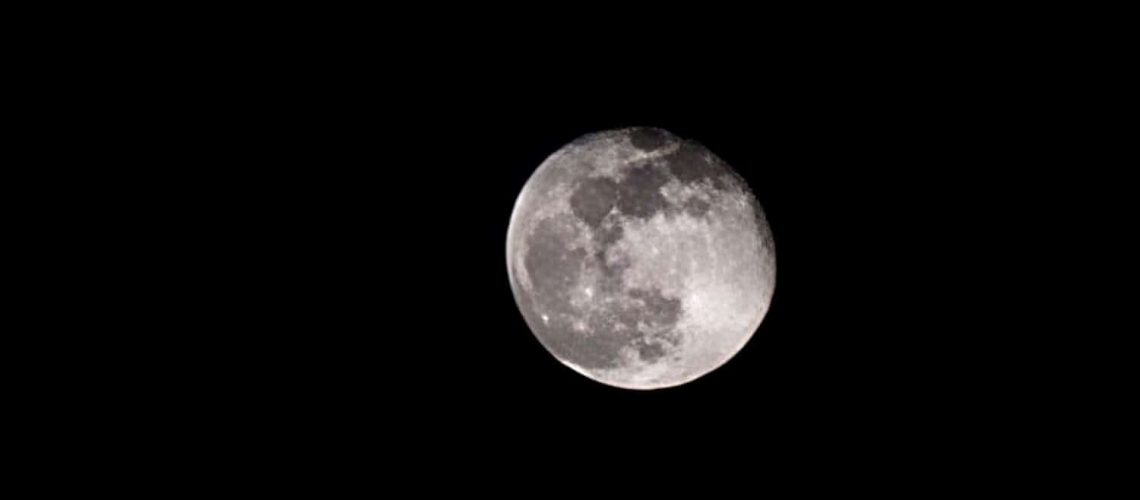
The Main Theories on the Moon’s Influence in Crop Cultivation
To date, there is still no conclusive scientific evidence confirming the various theories about the Moon’s influence on plants. Nevertheless, researchers such as Maria Thun, Alex Podolinsky, Hartmut Spiess, Ernest Zürcher, Adalbert Graf and Robert Frederick have developed interpretative models that continue to stimulate interest and debate. Their work combines field observations, practical experience and, in some cases, philosophical or spiritual perspectives.
In addition to her well-known theory of the trigons, Maria Thun considered perigee to be an unfavourable period for cultivation, while attributing a positive influence associated with air and light to apogee. Alex Podolinsky recommended sowing during the waxing Moon, preferably in the days leading up to the Full Moon, while also sharing some of Thun’s interpretations concerning lunar nodes and trigons. Hartmut Spiess, on the other hand, suggested sowing three or four days before the Full Moon (avoiding the day itself) and considered the synodic and tropical rhythms to be more important than the sidereal rhythm.
In conclusion, although the Moon’s influence on plants is not yet fully understood or confirmed by scientific research, empirical observations and the theories proposed by these researchers provide valuable insights for anyone wishing to explore this fascinating subject further. The following table summarises the main observations and interpretations put forward by the authors mentioned above.
| A | B | |
| AUTHORS OF | THEEFFECTS ON PLANT | SINDIRECT EFFECTS ON PLANTS |
| 1) INCREASING SYNODIC RHYTHM | The crescent moon stimulates plants and also germination the stimulus increases as moisture increases. Sowings made before the Full Moon starting on the 5th day are most stimulated. | The days before the Full Moon promote life in general, thus also the development of pathogens, insects, pests. So this is the time to spray preventive treatments against fungal diseases. logging done on a crescent moon in the winter period will bring us heavier wood. |
| 2) WANING SYNODIC RHYTHM | During the waning Moon, the Moon’s effects on plants are the opposite of those described above. Plant growth is no longer stimulated, so it is generally advisable to avoid sowing before the New Moon. | At this time, and particularly in the days before the New Moon, there is less vital stimulus for pathogens as well. Timber cut at this time will be lighter and more resistant to rot and pest attack. It is during these days that poles for vines should be cut. |
| 3 # ASCENDING RHYTHM | During the Ascending Moon, increased growth of the aerial parts is determined in plants. The earth exhales sending forces to the aerial parts. | This is the ideal time to distribute silica horn, to harvest leafy vegetables, fruits, to make hay, and to collect medicinal plants (aerial parts). According to Maria Thun these effects increase respecting the trigon theory. |
| 4) DESCENDING RHYTHM | The effects are exactly the opposite of those observed during the Ascending Moon and are therefore associated with the root system. It is as if the Earth were inhaling, directing its forces towards the roots. | This is the ideal time to spray horn manure (possibly respecting the trigons), spread compost, transplant trees, prune shrubs as well, so even the vines. This is the time to harvest root vegetables, preferably in the evening. |
| 5 # MOON NEXT IN APOGEE | Prevailing opinion: intensification of Air forces. With the Moon further away we have an intensification of solar forces. |
| 6 # NEXT MOON IN PERIGEE | Prevailing opinion: intensification of Earth and Water forces. With closer moon, lunar forces are greater. Operating at this time means giving more vigor to plants, but may expose them to more cryptogamic diseases. |
| 7 # LUNAR NODES | Prevailing opinion: negative influences on soil, plants and on fruit organoleptic properties. Best to avoid fixing harvests near nodal points. |
I have always been fascinated by the Moon’s “spirituality”. Before investigating its possible effects on cultivation, however, I preferred to focus on understanding the fundamental principles of agriculture. I learned how to design a self-sustaining agricultural organism, organise crops in harmony with the landscape, produce compost, revitalise the soil and respect the natural rhythms of plants. Only afterwards did I devote myself to studying lunar recommendations, carrying out numerous experiments, sometimes following them carefully and, at other times, deliberately doing exactly the opposite. These are the conclusions I have reached.
MY EXPERIENCE AND CONCLUSIONS
Lumber
As far as timber is concerned, my own observations fully agree with those reported in points B1 and B2 of the table. If you have any doubts, try it yourself: make a few wooden vineyard posts, some during the waxing Moon approaching the Full Moon and others during the waning Moon in the days preceding the New Moon. You will notice that the first ones often begin to decay after about four years, whereas the latter may last for up to twenty years without any treatment (although longevity also depends on the type of soil). If you would like to explore this subject further, I recommend the writings of Ernst Zürcher, Professor Emeritus and one of the leading researchers in wood science. Zürcher combines scientific pragmatism with a spiritual vision, maintaining that human health is inseparable from the health of forests. He was among the first to promotesilvotherapy,a therapeutic approach based on the healing relationship between people and forests.
Synodic rhythm
This is the lunar rhythm best known by previous generations, who did not rely on astronomical calendars but knew that when the Moon reached its highest point in the sky (which occurs when the Moon is in Gemini), its influence became stronger.
My own experience suggests that the waxing Moon promotes plant development, provided that sufficient moisture is available. I have observed that grapevine downy mildew, one of the most serious diseases in viticulture, tends to become more severe around the Full Moon. If rainfall occurs in May or June close to the Full Moon, fungal infections may become particularly aggressive, so it is advisable to protect the vines during those periods.
In general, preventive treatments carried out about fifteen days before the Full Moon are often more effective than those performed during the waning Moon.
On the other hand, during periods of drought, the Moon’s influence is much less noticeable.
I have also observed that in certain places the Moon’s influence appears to be stronger, for example near rivers or lakes, especially when they are located to the south of the vineyard.
Sidereal rhythm
I strongly believe in the studies and research carried out by Maria Thun and have no doubt that, in the environment where she worked, she observed real effects related to cosmic forces and the different phases of the Moon.
However, I also believe that the guiding principle in agriculture, as in any other discipline, should be simplification. Agricultural operations often have very limited time windows, making it difficult to follow both lunar indications and planetary or constellational influences at the same time.
Furthermore, the effects attributed to constellations may themselves be influenced by many other cosmic and terrestrial variables, which are difficult to isolate and measure.
Apogee and perigee
I strongly believe that working on plants during the perigee phase encourages excessive vegetative growth. For this reason, I prefer to avoid any intervention in the vineyard, especially when perigee coincides with the waxing Moon.
My goal is not to obtain excessively vigorous vines, but balanced plants capable of directing their energy not only towards shoot growth but also towards fruit production.
Lunar nodes
Just as we sometimes have “off days”, nature seems to have them as well. In my experience, these moments often coincide with the lunar nodes.
For this reason, I prefer not to carry out any work, either in the vineyard or in the winery.
CONCLUSIONS
In my experience, the Moon’s influence on organic farming should be considered both in its direct and indirect effects. In the latter case, it is worth identifying whether there are days that should be avoided for certain vineyard operations.
For example, during the 2024 harvest I would have avoided 5 September (lunar node + apogee) and 18 September (lunar node). These are perfectly manageable decisions, provided that the work is planned well in advance.
In addition to avoiding the lunar nodes, I would also avoid working during perigee.
If I were planting a new vineyard today, I would choose a period with a waxing Moon (and preferably a descending Moon). In 2024, a particularly favourable period would have been from 8 to 23 May.
I would schedule summer pruning during the waning Moon to reduce excessive vegetative regrowth and carry out as many summer vineyard operations as possible—such as soil cultivation and mowing—during the waning phase.
Finally, regarding disease management, I would pay particular attention to protecting the vines during the period leading up to the Full Moon, especially in May and June.
For harvest, I would choose, whenever possible, a period during the Ascending Moon, after also considering the other determining factors, such as winery logistics, the desired phenolic ripeness and the weather forecast.
I hope this article offers food for thought and encourages curiosity, discussion and further research.
Campogialli, 8/28/2024