Principle No. 4
Imagine that you are in an area full of vineyards, with very long and endless rows of vines, where everything is perfectly ordered. You will probably think: Wow! How beautiful! I also, many years ago, experienced the same feeling. It is normal. However, that order is far from the supreme order that exists in nature.
Human linearity: order or illusion?
It is important to understand why we are attracted to this linearity. The contrast between the linearity to which humans are drawn and the complex, nonlinear order of nature has solid biological, cultural and cognitive foundations.
In fact, humans are attracted to linearity for several reasons:
- Cognitive efficiency: Our brains look for simple, repeatable patterns to save energy. Straightness is easy to recognize, predict and control. Straight rows give a feeling of order, predictability and clarity, allowing the mind to relax when faced with a system that appears “under control.”
- Dominion over natural chaos: Linearity symbolically represents human dominance over the disorder of nature. Fields cultivated in rows evoke the idea of organizational power, a kind of psychological reassurance resulting from the imposition of human order on an otherwise unpredictable context.
- Practical function for the farmer: Straight rows make farm work easier, allowing the use of machinery, simplifying crop management and optimizing space. They are also easier to design and implement, responding to the human desire for immediacy and predictability.
The higher order of nature.
Nature, on the other hand, operates on a completely different plane from human linearity. Seemingly chaotic, nature is based on complex, adaptive and dynamic patterns.
- Biological efficiency: Nature does not seek symmetry or repetition, but patterns that optimize resources and function. Its forms follow adaptive principles, such as Fibonacci sequences in sunflowers or logarithmic spirals in shells. This complexity allows nature to respond to change resiliently and creatively.
- Interconnection: Nature does not like isolation, but favors networks of relationships. One example is forests, where roots and fungi create interconnected underground systems. This distributed system ensures that there is no easily attacked “weak point,” as each element is integrated and functional to the whole.
Man and nature: a complex confrontation.
It is normal to ask: Why is man so approximate to nature? One answer lies in the very functioning of the human brain. Complex as it is, the brain is not designed to process entirely natural systems, which operate on immense temporal and spatial scales. Instead, humans tend to reduce complexity to simple, repeatable patterns.
Moreover, his view is short-term: If nature works for long-term sustainability, humans often think short-term, favoring immediate productivity. Finally, technological progress has reinforced the need for simple, linear patterns of production. Nature, on the contrary, is “biological” and self-organizing, capable of continuous adaptation without a predefined plan.
Learning from nature.
These arguments lead us to a fundamental question: What can we learn from nature? In many fields, such as biomimicry, solutions inspired by natural systems are already being designed (cities that follow flows similar to nervous systems or river networks, for example). But in agriculture, how can we apply these principles?
The answer lies in the development of agroforestry and polycultural systems, which mimic natural systems to increase biodiversity and resilience. These models are inspired by forests, combining plants of different strata and functions.
Mans method and the importance of syntropy.
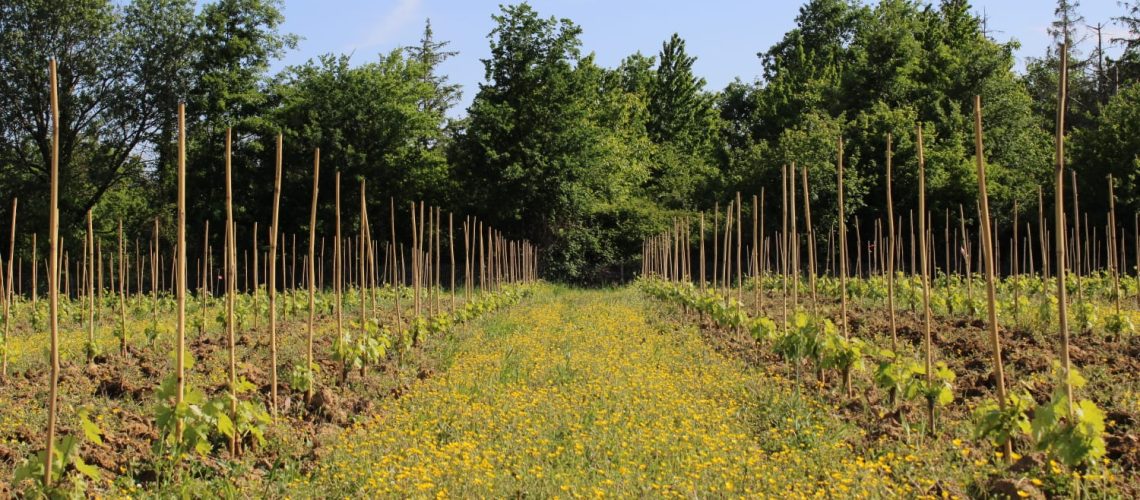
The idea of syntropy is central to this vision. In the Mans method, tree crops around vineyards play a key role. Small plots surrounded by trees and shrubs improve biodiversity and create more resilient ecosystems. In addition, the introduction of plants along the rows, such as almond or coral trees, adds additional centers of biodiversity that are very useful for the entire cultivated area.
Seeing a tree towering among the vines requires a different perception of order. This apparent “disorder” is not inefficiency but dynamic adaptation. The challenge is to learn to see the higher order in natural systems and integrate it into our practices, accepting that natural chaos is actually a model of incomparable resilience and innovation.
The invisible order of nature.
The order of nature often operates in the unseen. For example, plant roots are connected to networks of mycorrhizal fungi, which allow the exchange of nutrients, water and information between trees, creating a true “natural internet.” In addition there iscollaboration between trees: A young tree receives nutrients from larger trees through this network, improving its survival. In addition, trees can warn neighbors of pest attacks by sending chemical signals through fungi.
In this case, the higher order is represented by a system of interconnections that ensures the survival of the forest community as a single entity, going beyond competition and taking advantage of collaboration.
Let’s make it more practical by asking what the higher order of nature can teach the grower . Here is what I have learned.
Practical lessons from the natural order.
First lesson: Collaboration, not control.
Instead of forcing nature through intensive practices, the farmer should cooperate with natural processes, letting the ecosystem guide him or her.
This is why the Mans method adopts plant intercropping or agroforestry, where different species work together, reduces the need for chemical fertilizers and pesticides. Favoring less linear and intensive pruning systems, such as sapling, is a way to co-create with nature, where humans are not dominators but careful and respectful janitors.
Second lesson: Adapting to change.
Nature teaches that resilience comes from the ability to adapt to change, not from the imposition of a rigid order. Resilience is not rigidity but flexibility. Therefore, in the Mans method there can be not only vineyards, but also diversified crops and agroecological practices to mitigate risks related to climate, disease and economic fluctuations.
Third lecture: Diversity as strength.
No one can dispute that biodiversity is a key element for long-term stability and productivity. For this reason, the Mans method integrates trees, shrubs, herbaceous plants and annual crops into a single system. Grape varieties are selected not only based on type but also on the environmental connections in which they are found.
Fourth lecture: Think in terms of cycles, not linearity.
Nature works in closed cycles (energy, water, nutrients) where nothing is wasted; this teaches the farmer to design circular systems. That is why the Mans method promotes the collection of crop residues to produce compost or mulch, returning organic matter to the soil. Perennial crops and groundcovers are integrated to regenerate nutrients continuously, and animals are included in the farming system to close nutrient cycles (e.g., letting animals graze between crops to fertilize the soil).
Lecture 5: Balance between productivity and regeneration.
It is not just a matter of maximizing the immediate harvest, but of balancing production and regeneration in the farming system. Nitrogen-fixing plants, such as clover, should never be lacking in the rows to improve soil fertility, and utmost care is given to grassland management.
Sixth lesson: Observation and patience.
As nature takes time to reveal its patterns, the grower must learn to observe carefully and act patiently. The basis of the Mans method is observation. Monitoring how plants interact over time is critical. Making decisions based on long-term results guides every action, starting with improving soil quality and the local ecosystem.
Lecture 7: Beauty as an indicator of health.
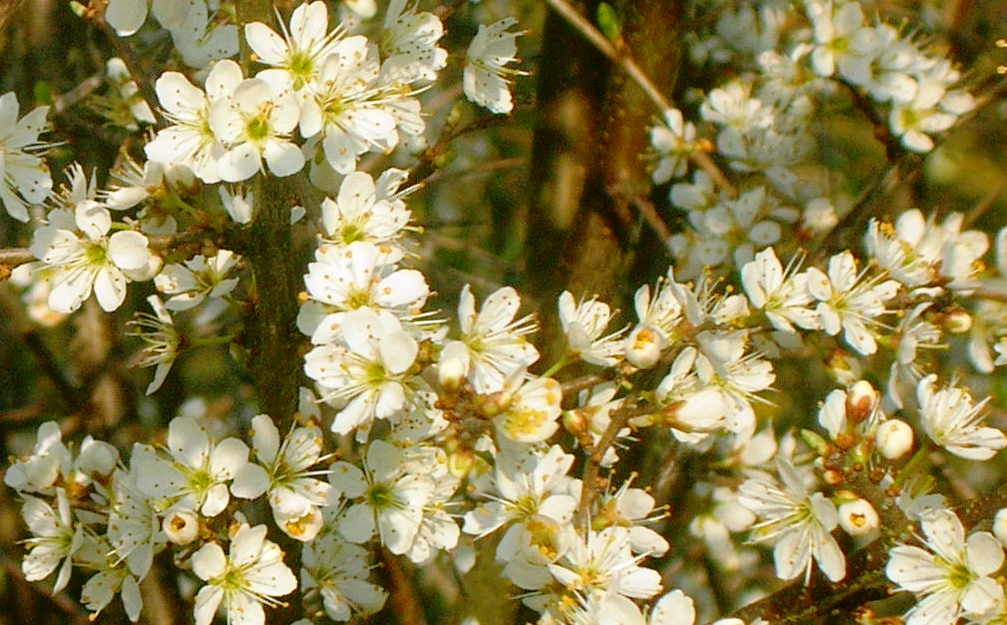
A visually balanced and diverse agricultural system is often also ecologically healthy. Natural beauty can be an indicator of system success. That is why the Mans method does not neglect the cultivation of flowers, trees and edible plants that attract pollinators, natural predators of pests and improve the aesthetics of the land. The presence of beneficial insects and wildlife indicates a balanced system. Dogwood plants, for example, are one of the first to bloom (February-March, depending on climate), at a time when pollen and nectar sources are scarce. Its yellow flowers, which are particularly attractive to bees, provide a valuable resource for bees as they emerge after winter and need to feed to sustain the colony. This is why it is particularly useful to plant dogwoods between crop rows or as part of multifunctional hedgerows to support pollinators and improve ecosystem health.
Eighth lecture: Integration of productivity and culture.
Nature teaches us that agriculture is not just an economic activity, but a cultural expression rooted in territory and time. This is why the Mans method pushes toward the use of traditional and local varieties (such as Valdarno Colorino), which are often better adapted to the ecological context. It also promotes the creation of agricultural spaces that also serve as natural habitats, places of beauty and connection with nature.
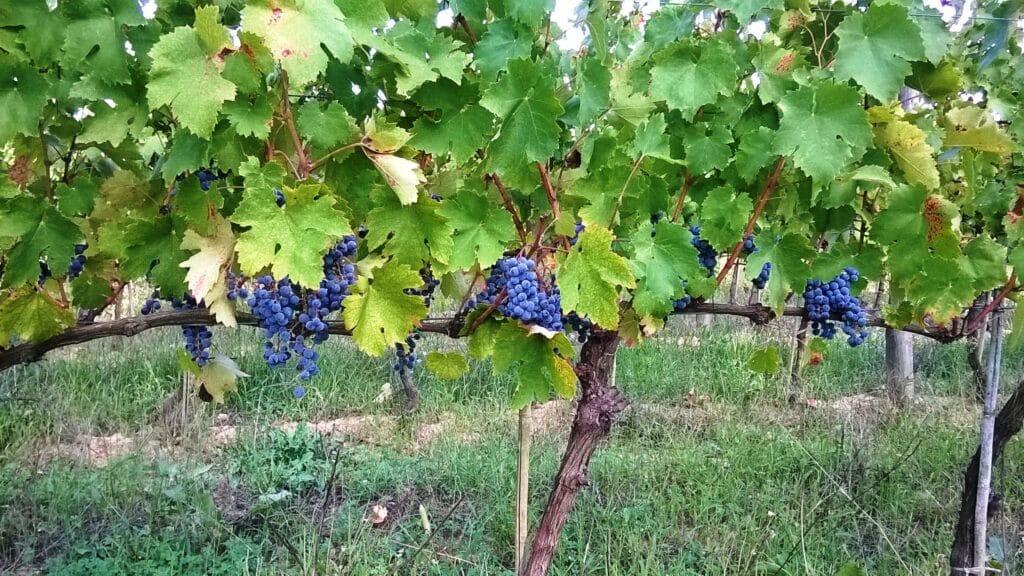
Surely the rules that can be learned by the cultivator from the higher order of nature are many more than eight. Everyone can experiment with them as he or she pleases, as long as, as I have already said, man positions himself not as a dominator but as a careful and respectful janitor. Agriculture must be seen as an interconnected and collaborative system, not as a collection of isolated elements. This approach helps build a more resilient, sustainable and productive agriculture, where soil and plant health is put at the center, just as it is in nature.
Obviously, something we cannot do without if we want to sustain our families: for example, row linearity (at least in viticulture). However, it is important to compensate for these approximations with sustainable practices and principles of biodiversity. Linearity is not just a tradition, but a response to the need to combine quality and quantity.
In conclusion, here is what the Mans method proposes:
- Diversify crops: There can be more than just vineyards in one’s agricultural organism. By integrating other crops, diverse plant species interrupt the life cycles of many pests and pathogens. It also results in greater climate resilience: a variety of crops makes the agricultural system less vulnerable to extreme events.
- Complementary plants: Complementary plants are species that provide mutual benefits when grown together. This concept underlies techniques such as intercropping and is based on natural synergies, both above and below ground.
- Polyculture: Polyculture is the simultaneous cultivation of multiple plant species on the same land. It is opposed to monoculture and offers several advantages: functional biodiversity, resource optimization (crops with roots of different depths explore various soil layers, making the best use of water and nutrients), and increased overall yield (due to beneficial interactions between species, the total yield of the farming system is in the long run often greater than with monoculture). For this reason, the Mans method places great emphasis on permanent grassing and tree crops around and within the vineyard.
The next installment will discuss biodiversity and sustainability.
Stay connected!!!